
"coffee in the Civil War"
500 article(s) found

Coffee Roaster Large Industrial Roaster
After the American Civil War, coffee beans first appeared packaged for sale on shelves in major cafe systems. By the end of World War II, the dominant commodity in the North American coffee market was pre-roasted coffee beans/pre-ground coffee powder made by large roasters, and this type of high-volume roasting technology with centralized and standardized requirements was called coffee.

Brief introduction of coffee producing countries: Guatemala
Guatemala, whose name comes from the Mayan language, means the land of many trees, the country of the forest. Located in Central America, it is known as the pearl in the crown of China and the United States. Although Guatemala has a limited land area, it has a rich and diverse climate. A country famous for its lakes and volcanoes, with volcanic soil, precipitation, temperature, humidity and altitude, Guatemala has a natural environment suitable for coffee growth.

Aromatic, full-bodied Rwandan coffee flavor Taste Manor characteristics Fine coffee Introduction
Clans began to coalesce into kingdoms in the 15th century, and by 1700 there were eight kingdoms in Rwanda. The Kingdom of Rwanda, ruled by the Tutsi Nyiginya clan, grew from the mid-18th century until it reached its peak in the 19th century under King Kigali IV. Between 700 BC and 1500 AD, some Bantu groups migrated to Rwanda, clearing forests for seed production

Rich and full-bodied flavor of Rwandan coffee description of grinding degree of taste introduction to the methods of variety treatment
Clans began to form kingdoms in the 15th century, and in 1700 there were eight kingdoms in Rwanda. The Kingdom of Rwanda, ruled by the Tutsi Nyiginya clan, grew gradually in the mid-18th century and reached its peak under the rule of King Kigali IV in the 19th century. Between 700 BC and 1500 AD, some Bantu groups moved to Rwanda to destroy forests and open up wasteland.

A brief introduction to the climatic characteristics of coffee in El Salvador
Climate characteristics, savanna climate. The plain area belongs to the tropical rain forest climate and the mountain area belongs to the subtropical forest climate. The average annual temperature is 25-28 ℃. The annual precipitation is more than 1800 mm in mountain areas and about 1000 mm in coastal areas. The rainy season is from May to October. Don't underestimate El Salvador's coffee production. In its heyday, it was the world's fourth largest coffee producer, but after decades of civil war, it was almost

El Salvador San Leticia Pacamara honey treatment, cooking sharing _ hand Pacamara honey treatment
Professional coffee knowledge exchange more coffee bean information please pay attention to the coffee workshop (Wechat official account cafe_style) El Salvador coffee production area-Santa Ana volcano El Salvador although the country is small, but do not underestimate the coffee productivity, in its heyday, it was once the world's fourth largest coffee producer, but the civil war for decades, almost dragged down the coffee industry, fortunately, the war has stopped in recent years

Long aftertaste of El Salvador Renas Manor Coffee Flavor and taste characteristics of boutique coffee
Savanna climate. The plain area belongs to the tropical rain forest climate and the mountain area belongs to the subtropical forest climate. The average annual temperature is 25-28 ℃. The annual precipitation is more than 1800 mm in mountain areas and about 1000 mm in coastal areas. The rainy season is from May to October. Don't underestimate El Salvador's coffee production. In its heyday, it was the world's fourth largest coffee producer, but decades of civil war almost dragged down coffee

Characteristics of grindability of El Salvador Himalayan Coffee cultivation of varieties by description of taste and flavor
Savanna climate. The plain area belongs to the tropical rain forest climate and the mountain area belongs to the subtropical forest climate. The average annual temperature is 25-28 ℃. The annual precipitation is more than 1800 mm in mountain areas and about 1000 mm in coastal areas. The rainy season is from May to October. Don't underestimate El Salvador's coffee production. In its heyday, it was the world's fourth largest coffee producer, but decades of civil war almost dragged down coffee

A brief introduction to the treatment method of grinding degree and baking degree of El Qomolangma boutique coffee beans
Coffee production in El Salvador was once affected by domestic political instability. In 1992, the parties signed a peace agreement and the civil war was suspended. The coffee industry began to recover. The present situation of coffee production is a natural and man-made disaster with an ill-fated fate. It is more appropriate to describe the challenges facing the coffee industry in El Salvador. Although it has got rid of the haze of war, El Salvador's coffee production still faces challenges from time to time.

Introduction to the characteristics of El Salvador Himalayan Coffee Flavor description and Grinding Variety producing area
A brief History of Coffee production in 1742, coffee was introduced to El Salvador from the Caribbean (1740). In the mid-19th century, El Salvador's original export pillar Indigo (one of the dyes) received a gradual decline in the development of synthetic dyes in Europe, and coffee gradually became the main export product under the guidance of the government. In 1856, the first 693 bags of coffee beans were shipped to Europe. all long

What is the method of handling Ivorian coffee? Flavor characteristics of Ivorian Coffee
Professional coffee knowledge exchange more coffee bean information please follow the coffee workshop (Wechat official account cafe_style) the west coast of Africa is located in the Republic of C ô te d'Ivoire (C ô te d'Ivoire). This small country has a fairly large coffee industry, although you are unlikely to find beans in specialty coffee shops, mainly Ivorian coffee, mainly lower production grade Robusta beans, recently.
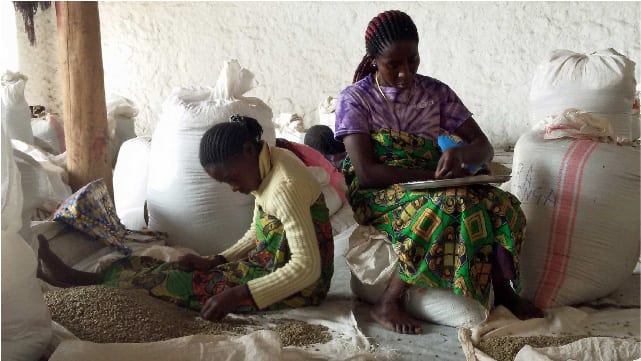
Current situation of coffee industry in Congo | how about coffee in Congo, a big coffee country in Africa?
Professional coffee knowledge exchange more coffee bean information Please follow the coffee workshop (Wechat official account cafe_style) the Democratic Republic of the Congo (DRC) is rich in resources, but due to years of civil war, lack of stability and infrastructure. The Congolese coffee industry used to flourish, but now it lacks a development strategy to help farmers realize the great potential of Congolese coffee and improve their health.

An introduction to the coffee-producing areas of El Salvador with the name of "the land of volcanoes"
A brief History of Coffee production in 1742, coffee was introduced to El Salvador from the Caribbean (1740). In the mid-19th century, El Salvador's original export pillar Indigo (one of the dyes) received a gradual decline in the development of synthetic dyes in Europe, and coffee gradually became the main export product under the guidance of the government. In 1856, the first 693 bags of coffee beans were shipped to Europe. all long

El Salvador Coffee Variety Flavor description introduction to Fine Coffee Bean Taste Manor
Savanna climate. The plain area belongs to the tropical rain forest climate and the mountain area belongs to the subtropical forest climate. The average annual temperature is 25-28 ℃. The annual precipitation is more than 1800 mm in mountain areas and about 1000 mm in coastal areas. The rainy season is from May to October. Don't underestimate El Salvador's coffee production. In its heyday, it was the world's fourth largest coffee producer, but decades of civil war almost dragged down coffee

Introduction to boutique coffee with fragrant flavor in El Salvador Coffee Manor
Savanna climate. The plain area belongs to the tropical rain forest climate and the mountain area belongs to the subtropical forest climate. The average annual temperature is 25-28 ℃. The annual precipitation is more than 1800 mm in mountain areas and about 1000 mm in coastal areas. The rainy season is from May to October. Don't underestimate El Salvador's coffee production. In its heyday, it was the world's fourth largest coffee producer, but decades of civil war almost dragged down coffee

El Los Alpes Farm Coffee Bean Cup Test Flavor_El Salvador Coffee for What People Drink
Professional coffee knowledge exchange More coffee bean information Please pay attention to coffee workshop (Weixin Official Accounts cafe_style) Aida Batlle can be said to be the pioneer of Salvadoran fine coffee, but also a legend in the fine coffee industry. She spoke perfect English and fled El Salvador's civil war with her family between 1980 and 1992

A brief introduction to the Market Price of Fine Coffee beans in Renas Manor with balanced Taste
Don't underestimate El Salvador's coffee production. In its heyday, it was once the fourth largest coffee producer in the world, but decades of civil war almost dragged down the coffee industry. fortunately, the war has stopped in recent years, and the coffee industry has come back to life. The only benefit that the civil war brought to the country of El Salvador was that the farmers left their fields barren and failed to catch up with the most popular Katimo sun-exposed cultivation train in the past two decades.

A brief introduction to the description of the flavor, taste and aroma characteristics of high-quality coffee beans in Kimmel Manor
The first problem for Malaba coffee farmers is to set up a cleaning station. The coffee fruit must be transported to the cleaning station to wash the sugar under the skin of the coffee bean within 12 hours after picking, otherwise the flavor of the coffee will be greatly damaged. In July 2001, with UNR, the Ministry of Culture and Industry of Rwanda (Office des Cultures Industrielles du Rwanda,OCIR-Caf), ACD

The long aftertaste of Rwanda's Chimaier estate fine coffee beans variety planting market price profile
PEARL brought coffee specialists to Rwanda, where it was responsible for maintaining contact with the seller, Community Coffee of Louisiana, USA, and sending samples to Louisiana. In June 2002, representatives of Public Coffee visited Malabar. At that time, the current President of Rwanda, Paul Kagame, spoke on behalf of the government about the importance of this plan.
How has coffee changed America? The History of Coffee in the United States
1670 Dorothy Jones from Boston was licensed to sell coffee. He became the first American to sell public coffee. From 1688 to 1688. Coffee replaced beer as the most popular breakfast drink in New York. The civil war of 1861-1865 raised the popularity of coffee to a new level. Soldiers on both sides are equipped with coffee beans on their mouths.